On this page
Finding cheap car insurance in Iowa is not just about picking the lowest monthly payment you see. It means matching price to protection so your policy actually works when you need it. This guide walks Iowa drivers through coverage requirements, cost comparisons, deductible decisions and practical steps for lowering premiums without creating dangerous gaps.
Key Takeaways
A published Iowa average does not determine your price. The right policy depends on your household, vehicles, coverage choices and driving record.
-
Iowa is not a no fault state. It operates under an at-fault insurance system where the at fault driver and their liability insurance pay for injuries and property damage after a crash.
-
Iowa’s minimum coverage requirement is 20/40/15 – $20,000 bodily injury per person, $40,000 per accident and $15,000 property damage liability per accident. These minimum limits often are not enough to protect many Iowa households in a serious accident.
-
Comparing car insurance in Iowa requires matching policy term, limits, deductibles and fees across every quote, not just looking at the monthly price.
-
IowaCarInsurance.com (Drivers Insurance Agency, Inc.) can compare participating insurers for Iowa drivers by phone at (844) 425-1313 or through the quote page. An estimate does not bind coverage.

How to find cheap car insurance in Iowa right now
There is no single cheapest insurance company for every driver in the Hawkeye State. Your driving history, age, ZIP code, vehicle and coverage type significantly affect car insurance rates in Iowa, so the only reliable method is comparing personalized quotes.
Evaluate cheap Iowa auto insurance over the full six- or twelve-month policy term, not only the first month’s payment. NerdWallet’s October 2026 analysis reports averages of about $33 monthly for minimum coverage and $186 for full coverage, using the sample described below. These are averages, not the cheapest available quotes or agency offers.
Before shopping, gather consistent information: every driver in your household, each vehicle’s VIN, annual mileage, garaging address (Des Moines, Cedar Rapids, Iowa City or elsewhere), and any tickets or accidents from the last three to five years. Request at least three or four comparable Iowa auto insurance quotes, making sure each uses the same liability limits, comprehensive coverage deductibles and collision coverage deductibles.
Root advertises potential savings up to $1,300 a year for drivers switching to that company. That is a carrier-specific marketing claim, not a statewide average or a savings promise from IowaCarInsurance.com. Compare actual offers for your circumstances. IowaCarInsurance.com can help drivers with clean records, lapses, SR-22 filings and non-owner insurance compare options from participating insurers by phone or through the quote form.
Understand Iowa’s minimum coverage requirements (20/40/15)
An Iowa auto liability policy used to meet financial-responsibility requirements must provide at least the applicable minimum levels under Iowa Code § 321A.21.
Iowa minimum liability is 20/40/15, which means:
-
Drivers must have $20,000 bodily injury liability per person
-
Drivers must have $40,000 bodily injury liability per accident
-
Drivers must have $15,000 accident property damage liability per accident
These liability limits apply when an Iowa driver is legally responsible for a crash. They pay the other party’s medical bills and property damage when the insured driver is at fault, not the at-fault driver’s own car. Iowa requires liability insurance but not no-fault coverage. The legal limits do not set the premium; compare current offers for the same coverage.
Iowa requires inclusion of uninsured and underinsured motorist bodily-injury coverage at 20/40 unless rejected in a separate written form. The statutory limits do not automatically increase with higher liability limits. Review any rejection under Iowa Code § 516A.1. A cheaper quote may reflect a rejection of those coverages rather than better pricing.
Most drivers should at least consider higher liability limits beyond the state minimum levels. Even a moderate injury crash on I-80 or in Des Moines could easily exceed 20/40/15, leaving the financially responsible driver personally liable for the difference.
Full coverage vs. minimum coverage for Iowa drivers
Minimum coverage means carrying only the state-required liability insurance plus any mandatory coverages you keep. The common term full coverage car insurance usually means liability plus comprehensive and collision coverage on the vehicle, but actual policy terms control what is covered – there is no standardized definition under Iowa law.
The same NerdWallet analysis, updated October 2, 2026, reports $397 annually for minimum coverage and $2,233 for full coverage; its Travelers full-coverage sample is $1,443. It uses 35-year-old single male and female drivers with good credit and clean records, a 2023 Toyota Camry LE and 12,000 annual miles. Full coverage uses 100/300/50 liability, 100/300 uninsured-motorist limits and $1,000 comprehensive/collision deductibles. These sampled estimates are not a quote, a carrier appointment claim or guaranteed eligibility; check current personalized offers.
When liability-only minimum coverage might be considered:
-
Older paid-off car you could afford to replace out of pocket
-
Strong emergency savings to cover your own vehicle damage
-
No lender or lessor requirement for physical damage coverage
When broader protection makes sense for Iowa drivers:
-
Newer vehicle with a loan or lease in place
-
Limited savings that could not absorb a total loss
-
Frequent commuting on interstates I-35 or I-380 where severe weather and deer are common hazards
Ask for two sets of quotes – one at or near minimum coverage and one with higher liability limits and physical damage coverage – to see how much extra protection really costs over a six-month term.
Compare the total cost, not just the monthly price
Cheap car insurance in Iowa depends on the total cost for the same term, limits and deductibles, including all fees and payment conditions. Confirm whether you are comparing a six-month or twelve-month policy term, and avoid doubling a six-month quote to guess a yearly cost since renewal prices can change.
|
Hypothetical comparison |
Option A |
Option B |
|---|---|---|
|
Policy term |
Six months |
Six months |
|
Illustrative term premium before fees |
$600 |
$570 |
|
Collision deductible |
$500 |
$1,000 |
|
Decision point |
Higher premium, lower deductible |
$30 less premium, but $500 more deductible exposure on a covered collision claim |
These numbers are invented to demonstrate comparison math, not Iowa market rates or a quote. A $30 cheaper six-month premium might not be worth taking on $500 more out-of-pocket deductible exposure if a covered collision happens soon. Insurance rates vary dramatically by ZIP code and by driving history in Iowa, so your actual numbers will differ.
Ask whether installment fees, paper billing charges or automatic payment discounts are already included in the quoted price before deciding which option is really cheaper.
Deductibles, comprehensive coverage and collision: balancing risk and savings
Comprehensive coverage and collision coverage protect the insured vehicle itself, and choosing deductibles affects both premium and out-of-pocket costs after a claim.
-
Collision coverage pays for vehicle damage in accidents – specifically, covered damage from colliding with another vehicle or object, subject to the selected collision deductible.
-
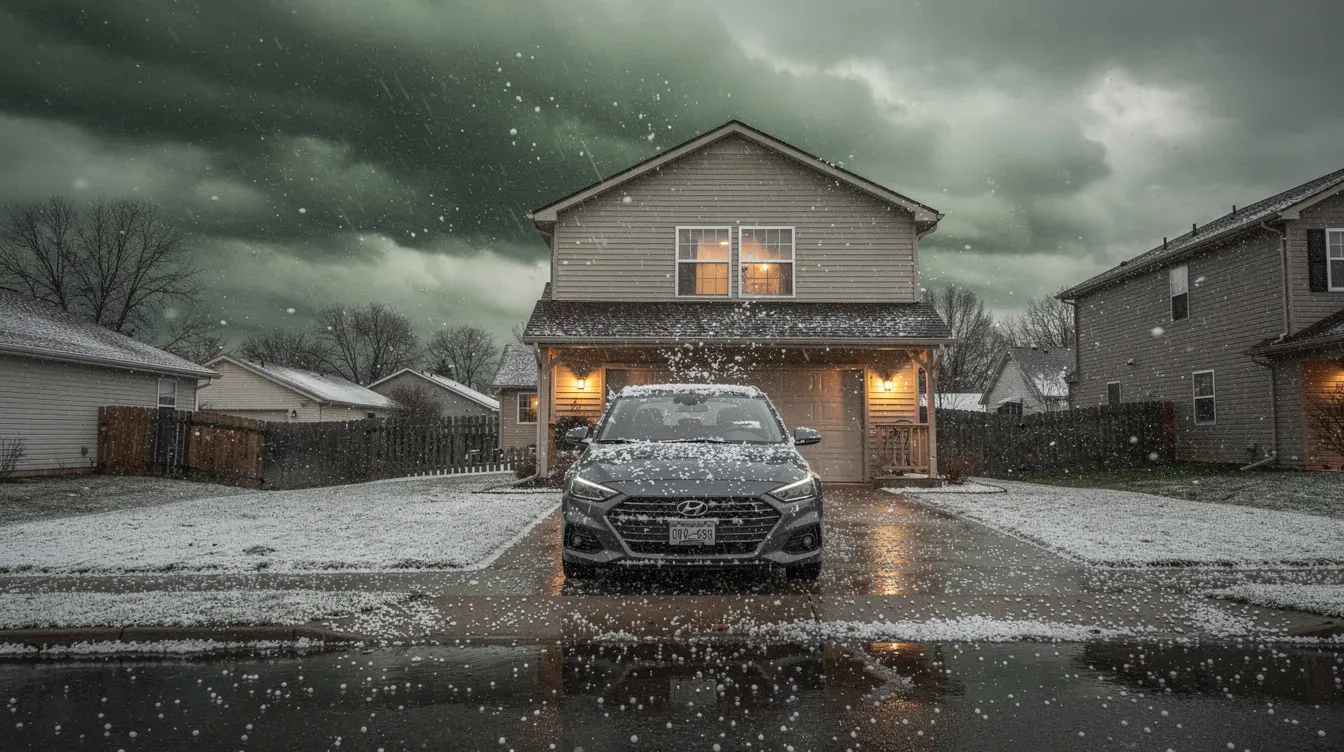
Comprehensive coverage pays for non-collision damages such as hail, theft, fire, vandalism or hitting a deer on a rural Iowa road, subject to the comprehensive deductible. Iowa’s severe weather and falling objects from storms make this coverage relevant for many drivers.
Raising deductibles can lower monthly insurance premiums, but deductibles should be amounts the household could realistically pay within a few days if a loss happened tomorrow.
Consider a hypothetical example: an Iowa household weighs raising a comprehensive deductible from $500 to $1,000. If the premium drops by $40 over six months but covered hail repairs exceed $1,000 next week, the higher deductible adds $500 to their share, assuming no other adjustments. The premium savings only break even after several claim-free terms. These figures are illustrative only.
Discounts and telematics programs for lower Iowa insurance rates
Common Iowa car insurance discounts include multi-car, multi-policy, good student, safe driver, defensive driving course completion and preferred payment methods. Iowa drivers can receive multi-car discounts on insurance, and homeowners may qualify for additional discounts on car insurance in Iowa. Drivers can lower insurance premiums by bundling auto insurance with homeowners or renters insurance, and Iowa drivers can save by bundling insurance policies together. Paying your premium in full can earn discounts in Iowa, and Iowa drivers can get discounts for obtaining an insurance quote early.
However, available discounts vary by insurance company and are not guaranteed. A bigger discount percentage does not always mean a lower final price if the starting rate is higher.
Telematics or usage-based insurance programs track driving behavior through a mobile app or plug-in device, often measuring hard braking, nighttime driving, mileage and phone use. Before enrolling, Iowa drivers should read the program’s privacy terms to understand what data is collected, who can access it and whether continued participation is required to maintain any introductory discount. Ask whether telematics can result in surcharges as well as discounts, and decide if the tradeoff fits your driving habits.
Special situations: SR-22, non-owner policies and coverage gaps
Some Iowa drivers need non-standard solutions, and cheap car insurance in Iowa must still satisfy Iowa Department of Transportation and lender requirements.
-
An Iowa SR-22 filing is a certificate of financial responsibility often required after certain violations such as OWI or driving without insurance. Requirements depend on the individual DOT notice and reinstatement conditions. Visit our Iowa SR-22 guide for details if you receive a proof-of-financial-responsibility letter.
-
Non-owner coverage protects drivers using vehicles they don’t own by providing liability coverage. It usually does not cover vehicles owned by anyone in the insured’s household.
-
Lapses in coverage can increase future auto rates and may lead to Iowa registration or driver’s license problems. A vehicle owner should avoid going even a few days without required liability coverage when changing policies, since a lapse can lead to suspension of a driver’s license or vehicle registration and affect the ability to legally drive and carry proof of insurance.
Keeping coverage continuous when you switch companies
Switching insurers can help some Iowa drivers save on car insurance, but timing matters to avoid uninsured days.
-
Select a final quote and confirm acceptance and the exact effective time with the new insurer.
-
Schedule cancellation of the old auto insurance policy only after the new coverage is confirmed in writing.
-
Verify that all vehicles, drivers, lienholders and any required SR-22 filings have been added to the new policy.
Submitting a quote form, receiving an estimate or making a partial payment does not by itself guarantee coverage. Do not rely on an assumed grace period after a missed payment to keep driving legally. Cancellation and reinstatement rules vary by policy and circumstances.
A practical comparison checklist for Iowa drivers
Use this list every time you compare cheap car insurance quotes as additional resources for Iowa drivers:
-
Keep drivers, vehicles, garaging address, commuting mileage and usage (personal, business, delivery) the same across all quotes
-
Match liability, uninsured/underinsured motorist and any optional injury coverage amounts
-
Match comprehensive and collision deductibles
-
Compare rental reimbursement limits and roadside assistance separately – these optional car insurance coverages differ by insurer
-
Record the total term premium, first payment amount and all fees
-
Confirm every discount and its conditions before relying on the price
-
Verify insurance coverage acceptance and the effective time before driving on the new policy

Common questions about cheap car insurance in Iowa
This Iowa car insurance FAQs section covers practical topics not fully addressed above. Individual policies and underwriting rules vary by company, and final eligibility, coverages and premiums depend on the issuing insurer’s terms and Iowa law. All examples below are hypothetical and for illustration only.
Is Iowa a no-fault state for car insurance?
Iowa is not a no-fault insurance state. Iowa operates under an at-fault insurance system where the at fault driver pays for damages in Iowa accidents. The at-fault driver’s liability coverage pays up to the policy limits, and injured parties may pursue additional compensation if damages exceed those limits. This makes adequate bodily injury liability limits and uninsured/underinsured motorist coverage especially important for good drivers and many drivers alike. As the Iowa Insurance Division explains, understanding whether Iowa is a no fault state helps vehicle owners choose appropriate coverage options.
Can I really save money by changing my comprehensive and collision deductibles?
Yes – increasing deductibles on comprehensive coverage and collision coverage can reduce premiums, but savings vary by insurer, vehicle type and clean driving record status. Ask agents to show side-by-side quotes for $250, $500 and $1,000 deductibles so you can see how much premium changes at each step. A deductible should never be higher than the amount you could realistically pay out of pocket if a claim happens within the next few weeks.
Does cheap car insurance in Iowa ever make sense without comprehensive and collision?
Some Iowa drivers with older, low-value paid-off vehicles choose liability-only to keep premiums down, accepting the risk of paying for their own car’s damage or replacement. Compare the annual cost of those coverages against the current market value of the car minus the deductible. Any vehicle with a loan or lease usually must keep full physical damage coverage to meet the lender’s requirements – check your finance contract before removing physical-damage coverage.
How do tickets and accidents affect insurance rates in Iowa?
Moving violations, at-fault crashes and serious offenses such as OWI can raise insurance rates in Iowa for several years, though exact impacts vary by company and driving history. Some insurers surcharge more heavily for certain violations than others, which is why getting multiple Iowa auto insurance quotes can be useful after a ticket or accident. Completing an approved defensive driving course may help some drivers qualify for discounts, depending on insurer rules. To find the lowest car insurance rates in Iowa, compare personalized quotes from multiple insurers after any change in your driving record.
How can I get help comparing car insurance in Iowa?
IowaCarInsurance.com is the Iowa-focused website of Drivers Insurance Agency, Inc., an independent agency that can review coverage options from participating insurers for Iowa drivers, subject to each insurer’s eligibility rules. Call (844) 425-1313 or visit the quote page to request a car insurance quote tailored to your drivers, vehicles and preferred coverage amounts. A quote request or estimate does not bind coverage – final terms, eligibility and pricing depend on the issuing insurer’s approval and the policy documents. Roadside assistance provides specified emergency services. Rental reimbursement helps with eligible substitute transportation after a covered loss, subject to the actual daily allowance, total cap and end date; no universal $40 daily limit applies. Ask about these optional coverages when you call.