On this page
Iowa generally requires financial liability coverage and proof when you drive on its highways, subject to statutory exceptions. For most Iowa drivers, that means buying a liability car insurance policy. Here is what you need to know about the current requirements, your coverage options, and how to protect yourself and your household.
Key Takeaways
-
Iowa generally requires financial liability coverage for highway driving, subject to statutory exceptions. The current minimum auto liability insurance limits are 20/40/15: at least $20,000 bodily injury per person, $40,000 bodily injury per accident, and $15,000 property damage per accident. These are legal floors, not recommendations.
-
Minimum Iowa car insurance does not pay to repair your own vehicle. Collision coverage and comprehensive coverage are optional under state law but often required by lenders on financed cars.
-
Iowa follows a fault-based system for auto accidents. If you cause a crash, your liability insurance pays for the other party’s injuries and property damage, up to your policy limits.
-
Driving without insurance in Iowa can result in fines, license suspension, registration problems, and, after certain violations, an SR-22 proof-of-insurance filing requirement.
-
IowaCarInsurance.com can help Iowa drivers compare auto insurance options from multiple companies. Call (844) 425-1313 or get a quote online.
How Much Car Insurance Is Legally Required in Iowa?
Liability coverage is mandatory in Iowa for drivers. The most common way to meet this obligation is buying a car insurance policy with at least the minimum 20/40/15 split limits set in Iowa Code § 321A.21. Driving without required financial liability coverage can lead to enforcement action.
Liability insurance pays for injuries and damage you cause to other people when you are legally responsible for an accident. It does not pay to fix or replace your own vehicle.
An ordinary personal auto liability policy is the usual way to arrange coverage. Separate financial-responsibility rules can allow alternatives such as a bond or approved self-insurance in specified circumstances; do not assume these automatically replace the coverage and proof required for your vehicle.
Short and occasional trips still count. Section 321.20B also applies to vehicles driven in qualifying parking lots available without charge to the public or a business’s customers, including their access roads. Ask Iowa DOT about storage or other exceptions before canceling a policy.
Iowa 20/40/15 Minimum Liability Limits Explained
The shorthand “20/40/15” describes the minimum split liability limits that Iowa law requires on every auto liability insurance policy. Each number represents a separate cap:
-
$20,000 bodily injury per person: the maximum the policy will pay for one person’s injuries or death in a single accident. Bodily injury liability per person is $20,000 in Iowa.
-
$40,000 bodily injury per accident: the total the policy will pay for all injured people combined in one crash. Bodily injury liability per accident is $40,000 in Iowa.
-
$15,000 property damage per accident: the maximum for damage to other people’s vehicles, fences, buildings, signs, or other property. Property damage liability is $15,000 per accident in Iowa.
“Bodily injury” covers medical bills, lost wages, funeral expenses, and related costs for people you hurt. “Property damage” covers repair or replacement of vehicles and structures.
These are minimums. Many drivers select higher limits such as 50/100/50 or 100/300/100 to reduce the chance of paying out of pocket after a serious crash. Iowa Code § 321A.21 explicitly permits any amount above the floor. Keep in mind that quotes do not guarantee insurance coverage until confirmed by the insurance company; the policy declarations control the actual limits in force.
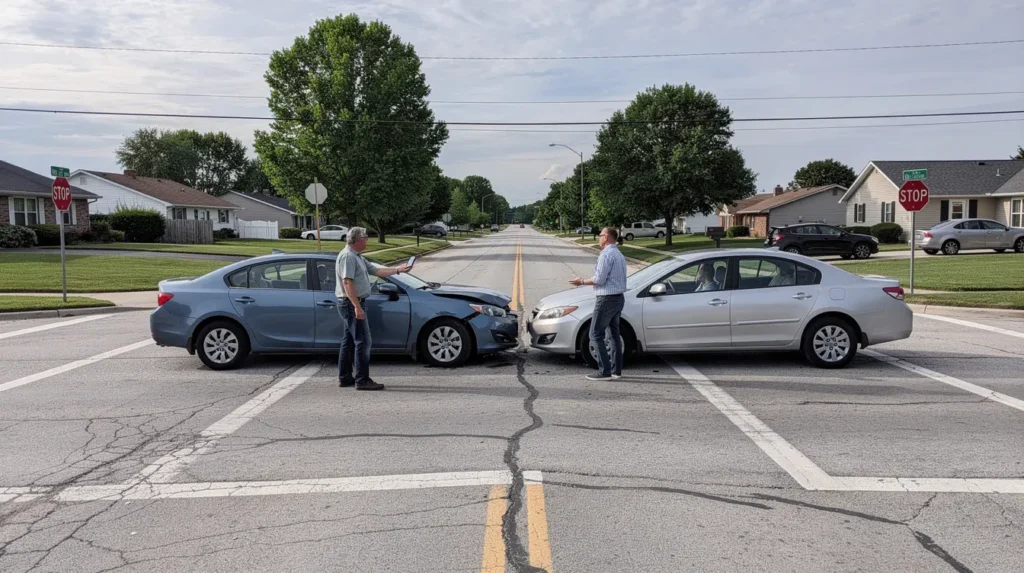
Liability Limits Comparison Table: Minimum vs. Higher Protection
The table below compares three common sets of liability limits available to Iowa drivers.
|
Limit Level |
Bodily Injury per Person |
Bodily Injury per Accident |
Property Damage per Accident |
Coverage comparison |
|---|---|---|---|---|
|
Iowa minimum (20/40/15) |
$20,000 |
$40,000 |
$15,000 |
Lowest split liability limits; substantial potential gaps |
|
Mid-range (50/100/50) |
$50,000 |
$100,000 |
$50,000 |
Higher limits; compare the price difference |
|
Higher (100/300/100) |
$100,000 |
$300,000 |
$100,000 |
More liability protection; still subject to limits |
Hypothetical example (property damage): You rear-end a newer pickup truck in Iowa City. The repair bill is $18,000. With the minimum $15,000 property damage limit, your insurer pays $15,000 and you are responsible for the remaining $3,000 out of your own pocket.
Hypothetical example (multiple injuries): You cause a crash that injures four people. Covered bodily injury damages total $70,000, with no single person claiming more than $20,000. With a 20/40 bodily injury limit, the maximum payout is $40,000 for all injuries in the accident. The remaining $30,000 falls on you personally.
Compare higher liability limits such as 100/300 with the minimum using the same drivers and vehicles. The additional premium varies by insurer and household; obtain quotes before deciding.
What Iowa’s Minimum Insurance Does and Does Not Cover
The legal minimum amount of coverage focuses on liability only. It protects other people from your mistakes; it does not protect your own car or cover many types of loss.
Typically covered by minimum liability:
-
Injuries to other people (bodily harm, medical bills, lost wages)
-
Repair or replacement of other people’s vehicles
-
Damage to buildings, poles, fences, or other property
-
Certain legal defense costs if you are sued
Not covered by minimum liability:
-
Repairs to your own car after an at-fault accident
-
Theft, hail, or storm damage to your vehicle
-
Hitting a deer or other animal
-
Vandalism, mechanical failure, or routine wear
Liability insurance does not cover your own vehicle damages. To protect your car, you need collision coverage, comprehensive coverage, or both. Medical payments coverage and uninsured motorist coverage can help protect you and your passengers.
Hypothetical scenario: You back into a parked car in a Des Moines parking lot. Your minimum liability policy covers the other driver’s bumper repair (up to $15,000), but your own broken taillight and scratched bumper come out of your wallet.
Collision and Comprehensive Coverage vs. the Legal Minimum
Iowa law does not require collision coverage or comprehensive coverage. Many Iowans still carry them, and lenders almost always require both on financed or leased vehicles.
Collision coverage helps pay for damages to your car after a crash you cause, or after hitting another vehicle or object, minus your deductible. Collision coverage pays for damages to your car after an accident.
Comprehensive coverage protects against non-collision damages: hail, windstorms, flooding, falling tree limbs, theft, vandalism, and animal strikes. Comprehensive coverage protects against non-collision damages.
Hypothetical Iowa example: A spring thunderstorm drops golf-ball-sized hail on your car while it sits in your driveway. Without comprehensive coverage, you pay for every dent yourself. With a $500 deductible comprehensive policy, the insurer covers repairs above that amount.
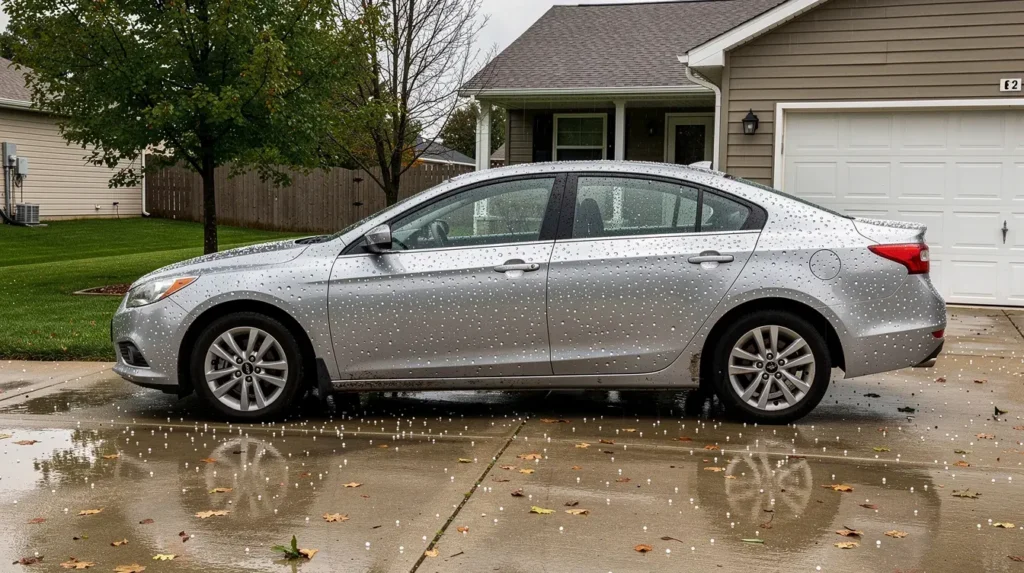
Choosing deductibles ($250, $500, $1,000, or higher) affects your premium and how much you pay before the insurance company contributes. A higher deductible lowers your premium but increases your out-of-pocket expenses at claim time.
Financed Cars, Lender Requirements, and Full Coverage
If a bank, credit union, or finance company holds a lien on your car, the loan contract almost always requires you to carry both collision coverage and comprehensive coverage on top of liability. “Full coverage” is not a legal term; it is shorthand many drivers use for a policy that bundles liability, collision, comprehensive, and sometimes other types of protection.
If you let collision or comprehensive lapse on a financed vehicle, the lender may add its own single-interest insurance at a higher cost or declare a loan default. This is separate from any state penalties for lacking liability.
Even after a car is paid off, consider the vehicle’s value, your savings, and your ability to absorb a total loss before dropping collision or comprehensive. A single deer strike or hailstorm can cost thousands. IowaCarInsurance.com can help drivers with financed cars compare available coverage options that satisfy both Iowa law and lender requirements.
Proof of Insurance, Cards, and Iowa Enforcement Rules
Drivers must have proof of liability coverage in Iowa. When driving, keep the required proof available in the vehicle, either as a physical insurance card in the glove box or an electronic copy displayed on a phone or portable device. The card must show the vehicle’s registration number or VIN, the insurer, the insured person’s name, and the coverage expiration date.
These requirements come from Iowa Code § 321.20B. Failing to show valid proof when a peace officer requests it can result in a warning, a citation, fines, or removal of your license plates and registration receipt. Iowa DOT may also require proof after a qualifying accident. Follow the actual notice and its deadlines; the accident-related process and its exceptions differ from an ordinary roadside proof check.
Keeping a current insurance card in your vehicle or on your phone is the simplest way to avoid problems during routine traffic stops. If your policy is canceled early, Iowa law requires you to destroy the old proof card.
This article provides general information. Iowa law, court decisions, and administrative rules can change; check official sources or speak with a licensed insurance professional for the most current details.
SR-22 Filings and Proof of Insurance After a Suspension
An SR-22 is a certificate of financial responsibility that some Iowa drivers must file after certain license suspensions or serious violations such as an OWI. It is proof that you carry at least the minimum liability limits; it is not a separate type of insurance policy.
Not every driver needs an SR-22. The requirement depends on the individual suspension notice and reinstatement instructions from the Iowa DOT. The Iowa DOT proof-of-insurance page explains when an SR-22 or alternative proof (such as a bond or employer fleet certificate) may be required, typically for two years from the effective date of the suspension.
Any policy used to file an SR-22 must meet at least the Iowa minimum 20/40/15 liability limits. Letting the policy lapse or cancel during the filing period triggers a new suspension. IowaCarInsurance.com can assist drivers who need an SR-22 in finding eligible car insurance coverage or non-owner insurance to meet those proof requirements.
How Driving History and Coverage Choices Affect Iowa Insurance Costs
Car insurance costs in Iowa depend on several factors: coverage limits, whether collision and comprehensive are included, vehicle type, age, marital status, location, and each driver’s driving record and claims history.
A clean driving history with no recent tickets or at-fault accidents usually helps keep premiums lower. Violations, at-fault crashes, and gaps in coverage often increase what drivers pay. Adding young drivers, insuring newer vehicles, or living in a larger city can also raise auto insurance rates.
Choosing only the minimum liability limits is usually cheaper than buying higher limits with full coverage. Your actual premium depends on your specific profile and the coverage quoted. Price alone should not drive the decision; balance what you pay against the protection you receive.
Compare options through an independent agency like IowaCarInsurance.com to find coverage and a price that fit your situation.
Optional Coverages: UM/UIM, Med Pay, and More
Iowa only requires liability insurance, but most insurance companies offer several optional coverages that give drivers and passengers broader protection.
Uninsured motorist (UM) coverage pays for injuries to you and your passengers when another at-fault driver carries no insurance at all. An uninsured driver can leave you with injury costs that their liability policy cannot pay. Uninsured motorist coverage is recommended for Iowa drivers.
Underinsured motorist (UIM) coverage kicks in when the at-fault driver’s bodily injury limits are too low to cover your expenses. Underinsured motorist coverage covers damages exceeding the other driver’s limits.
Under Iowa Code § 516A.1, applicable policies include uninsured and underinsured motorist bodily-injury coverage unless the named insured rejects all or the relevant coverage in a signed writing. Review your declarations and any rejection form; pricing and coverage terms vary.
Medical payments coverage (Med Pay) helps pay medical expenses for you and your passengers after an accident, regardless of who was at fault, up to the selected limit.
Other commonly available options include roadside assistance and rental reimbursement. Review each coverage with an agent to understand what is included and how a claim is handled.
How to Choose the Best Car Insurance Policy for Your Iowa Household
The best car insurance is different for every Iowa household. Budgets, vehicles, drivers, and risk tolerance all matter. A few guiding questions help narrow choices:
-
Liability limits: Many families benefit from limits above 20/40/15 to protect income, savings, and future wages from accident-related lawsuits.
-
Vehicle protection: Could you afford to repair or replace your car out of pocket after a total loss? If not, collision and comprehensive coverage are often worth carrying, especially on newer or higher-value cars.
-
Deductibles and extras: Compare how different deductible levels and optional coverages affect your overall premium and out-of-pocket costs. A higher deductible reduces premium but increases what you pay at claim time.
-
Household drivers: Factor in every person who drives vehicles in your household, including young or occasional drivers.
Most people save time and stress by working with an independent agency that can present options from multiple companies side by side. Contact IowaCarInsurance.com at (844) 425-1313 or visit /quote/ to compare quotes, review coverage choices, and check for available discounts with a licensed agent.
Official Iowa Sources and Legal Notes
This guide is for general educational purposes. It does not replace legal advice, the actual insurance policy, or official Iowa regulations.
-
Iowa Code § 321A.21 (minimum liability limits and financial responsibility): legis.iowa.gov
-
Iowa Code § 321.20B (proof of financial responsibility and enforcement): legis.iowa.gov
-
Check the Iowa Insurance Division and Iowa DOT websites for the most up-to-date information about auto insurance rules, because statutes and regulations can change.
-
Policy terms, conditions, exclusions, limits, and endorsements govern coverage. All examples in this article are hypothetical and simplified; actual claim outcomes can differ.
-
Sources last checked: October 20, 2026.
Frequently Asked Questions About Iowa Minimum Car Insurance
Below are answers to common questions that go beyond the main sections of this guide.
Do I need Iowa car insurance if I rarely drive my vehicle?
You need the required liability coverage and proof before driving, even for a short or occasional trip. If you plan to store a vehicle, ask your insurer and Iowa DOT about your circumstances before changing coverage. A loan contract, SR-22 requirement or other obligation may continue even while you are not driving.
Does my Iowa auto insurance cover me when I drive someone else’s car?
Liability coverage in Iowa usually follows the vehicle first: the car owner’s policy is primary for permissible drivers. Many Iowa policies also extend some coverage when you drive a non-owned car with the owner’s permission. Specific terms vary by insurance provider, so read your policy or ask your agent before assuming you are covered.
What is non-owner car insurance, and who might need it in Iowa?
Non-owner car insurance is a liability-only policy for a person who does not own a vehicle but occasionally drives cars belonging to others. It can sometimes satisfy certain SR-22 proof requirements when ordered by the Iowa DOT, though eligibility depends on the specific reinstatement conditions in your notice. It does not include collision or comprehensive coverage.
How long should I keep my proof-of-insurance cards and policy documents?
Keep current proof available when driving. Ask your insurer or agency how long to retain expired policies and claims records, particularly if a claim or coverage dispute remains open. These records can be important if questions arise about continuous coverage, past claims, or financial responsibility disputes.
Can I rely only on the Iowa minimum limits if I have significant savings or a home?
Drivers with substantial assets face greater financial risk if a serious at-fault accident exhausts minimum limits. A judgment for medical bills, lost wages, or death claims can reach well beyond $40,000. Many such drivers choose higher liability limits or add an umbrella policy for broader protection. Discuss your asset protection needs with a licensed agent or other professional to determine appropriate coverage levels.
For questions about your own situation, speak with a licensed IowaCarInsurance.com agent at (844) 425-1313.